Development version. Some content, features or translations may be incomplete.
Go back
La Batteria

La Batteria

Il Fortino

Period
19th century
Municipality
San Felice Circeo
Coordinates
41.2269, 13.0473
The place

The promontory’s coastal towers, dating from the 15th–16th centuries, had been heavily used in the early 1800s and were by then badly deteriorated and no longer fit for purpose; in May 1809 the towers of Cervia and Moresca were destroyed by the British.

Once Napoleon’s army had conquered the areas formerly belonging to the Papal States, San Felice was immediately recognised as a strategic location: in the part of Italy under French rule, too, changing military needs called for new fortifications in key positions.

In May 1811, after a pirate raid, the French army stationed in Rome sent Monsieur Vincentie of Geneva to San Felice with around 70 soldiers, who built two small forts on the sites of the towers of the same names: the coastal batteries of Cervia and Moresca.

Built during the Napoleonic occupation of the Kingdom of Naples, these structures represent the last major coastal fortification works on the promontory before the modern era.

To reach their posts from the village, the soldiers followed a narrow track, the old “Strada delle Torri” (Road of the Towers), whose route corresponds today to Via Grotta delle Capre, a stretch of Via del Faro and Via delle Batterie.

From 1811 to 1814 the pro-French garrison led by Commander Vincentie held out against the Neapolitans, who invaded the Papal States after breaking their alliance with Napoleon.

On 8 February 1814 the enemy forces, arriving from Anzio, landed right at Circeo and set up camp on the Roman acropolis. With the help of the people of San Felice, the French were forced to surrender to avoid a battle, and the Neapolitans held sway only until the following April, after which they left the area for good.

Hastily built, the batteries soon suffered considerable damage and in 1817 they were largely rebuilt.

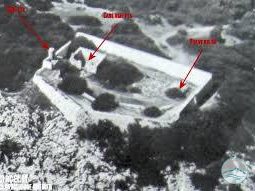
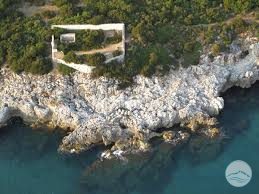
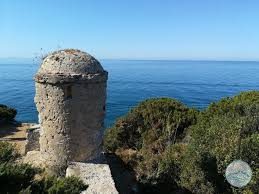
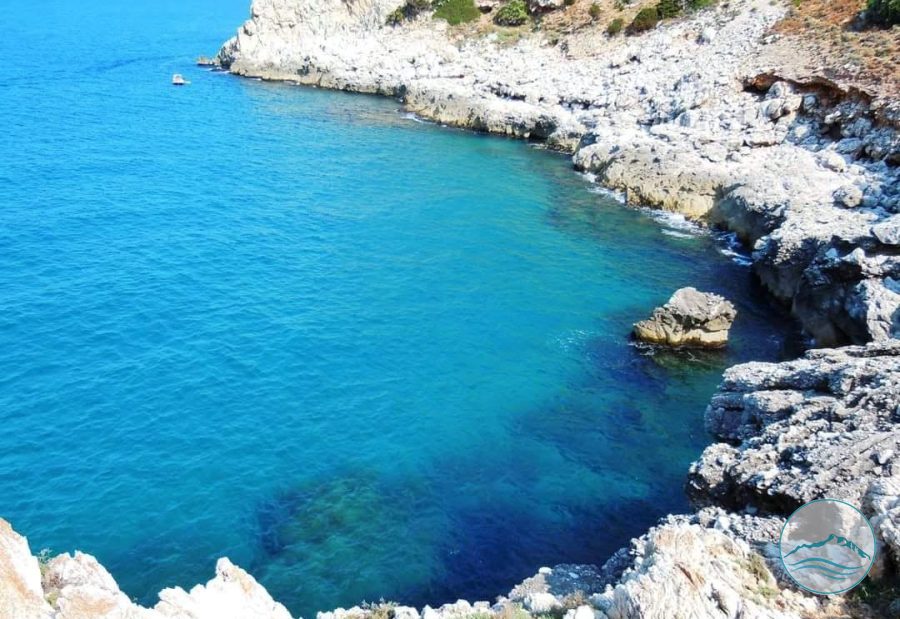
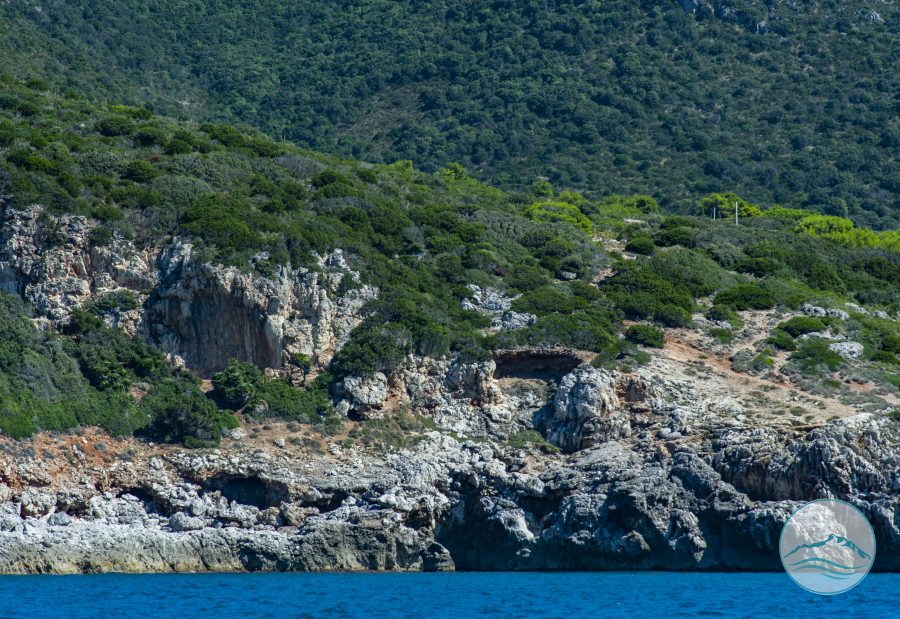
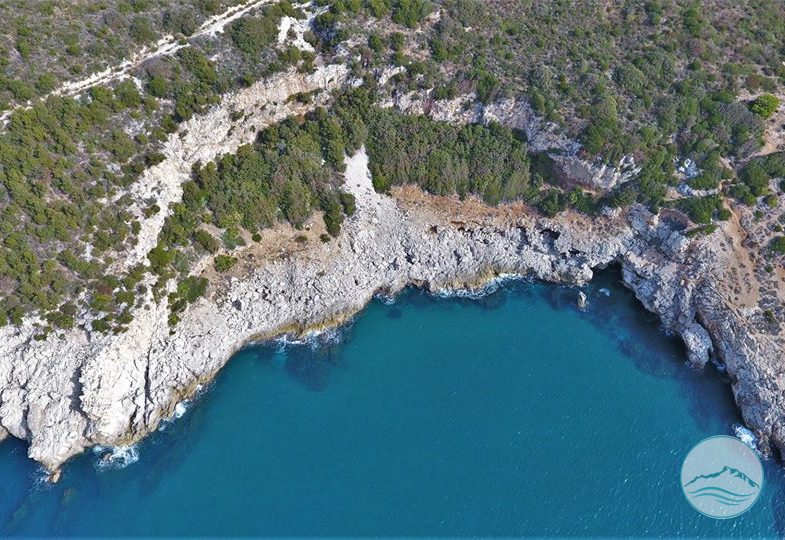
The Batteria Moresca is a large bastion rising above the edge of the cliff: it has a stone enclosure in the shape of an irregular pentagon, two gun emplacements, a sentry box, a small barracks, now roofless, and a large underground ammunition store.

Its twin, the Batteria di Cervia, near the present-day lighthouse, was an irregular hexagon with a signal furnace, two gun emplacements, a sentry box and an ammunition store: no trace of it survives today.

Following a request made in the early 1990s by the “Il Fortino” association, the Ministry for Cultural Heritage and Activities, on the recommendation of the Superintendency for Environmental and Architectural Heritage of Lazio, declared the “Batterie” property of particularly important interest under the Consolidated Act on Cultural Heritage (Legislative Decree 490/1999), placing it under protection.

The protection order, issued in 2001, was entered in the Latina Land Registry in 2005 and is binding on all subsequent owners or holders; the full text of the decree and the accompanying report can be found in the historical notes.

The Fortino stands within the “Parco della Batteria”, the strip of woodland overlooking the cliffs that has been protected since 1956 so that it remains free of buildings and open to all.

Despite this protection, the site is privately owned: the State has recognised its importance, but no public body is responsible for its management or upkeep. The structure is in a state of serious decay and has repeatedly been flagged by local associations as in need of restoration.

Even at the time the protection order was issued, the Superintendency noted that parts of the perimeter wall had collapsed and that the underground store was partially blocked.

Curiosities

Did you know?

A little gem to share with your travel companions.

Vincolo sulla Batteria – testo integrale

Come riportato nella descrizione della Batteria – il Fortino, sull’immobile esiste un vincolo posto dal Ministero per i Beni e le Attività Culturali su proposta della Soprintendenza: di seguito il testo integrale del decreto e della relazione storico-artistica.

Costituzione di vincolo legale rep. n. 0/58 del 19/1/2001, trascritta a Latina, Registro particolare n. 10474 del 28/6/2005.

MINISTERO PER I BENI E LE ATTIVITÀ CULTURALI

Ufficio Centrale per i Beni Ambientali Architettonici Artistici e Storici

IL DIRETTORE GENERALE

Visto il decreto legislativo 3/2/1993 n. 29;

Visto il decreto legislativo 20/10/1998 n. 368;

Visto il decreto legislativo 29/10/1999 n. 490 (Testo Unico);

Vista la nota protocollo n. 85679 del 13/12/2000 con la quale la competente Soprintendenza ha proposto a questo Ministero l’emanazione di provvedimento di tutela vincolistica, in riferimento al Titolo I del citato decreto legislativo 490/1999, dell’immobile appresso descritto;

Ritenuto che l’immobile denominato BATTERIE, sito in provincia di Latina, comune di San Felice Circeo, segnato al catasto al foglio 35 particella n. 13, confinante con particella n. 14 e Mare Tirreno, riveste interesse particolarmente importante ai sensi del Titolo I del citato decreto legislativo per i motivi illustrati nell’allegata relazione storico-artistica;

DECRETA

L’immobile denominato «Batterie» sito nel Comune di San Felice Circeo, così come individuato nelle premesse e descritto nelle allegate planimetrie catastali e relazione storico-artistica, è DICHIARATO DI INTERESSE PARTICOLARMENTE IMPORTANTE ai sensi del Titolo I del citato decreto legislativo n. 490/1999 e viene, quindi, sottoposto a tutte le disposizioni di tutela contenute nel decreto stesso.

Le planimetrie e la relazione storico-artistica fanno parte integrante del presente provvedimento, che sarà notificato, in via amministrativa, ai destinatari individuati nelle apposite relate di notifica e al Comune di San Felice Circeo.

A cura del competente Soprintendente esso verrà, quindi, trascritto presso la Conservatoria dei Registri Immobiliari ed avrà efficacia anche nei confronti di ogni successivo proprietario, possessore o detentore a qualsiasi titolo.

Avverso il presente provvedimento è ammessa proposizione di ricorso giurisdizionale verso il Tribunale Amministrativo del Lazio, secondo le modalità di cui alla legge 6 dicembre 1971 n. 1034, ovvero è ammesso ricorso straordinario al Capo dello Stato, ai sensi del D.P.R. 24/11/1971 n. 1199, rispettivamente entro 60 e 120 giorni dalla data di comunicazione del presente atto.

F.to: IL DIRETTORE GENERALE – Mario Serio

RELAZIONE STORICO-ARTISTICA

Soprintendenza per i Beni Ambientali e Architettonici del Lazio

San Felice Circeo (LT) – Batteria

In seguito all’occupazione di Roma da parte delle truppe napoleoniche del 1809, i francesi installarono numerosi presidi nei punti più strategici dello Stato pontificio, il cui demanio si estendeva all’epoca fino a Fondi. Il Circeo, quale promontorio sul mare, costituiva uno dei più importanti baluardi verso sud, per cui venne accuratamente munito di una stazione telegrafica e di un quartiere militare fisso insediato a San Felice Circeo. Nel maggio 1811, in seguito a una razzia di pirati, l’armata francese in Roma inviò a San Felice Circeo un certo Monsieur Vincentie, di Ginevra, con tre batterie di linea e circa 30 artiglieri, in tutto circa 70 soldati, i quali costruirono le due batterie Cervia e Moresca in sostituzione delle torri omonime distrutte dagli inglesi nel maggio del 1809.

Le due costruzioni però, essendo state costruite in gran fretta sotto l’incalzare degli eventi, subirono con il passare del tempo numerosi danni, tanto che nel 1817 vennero in gran parte ristrutturate.

La batteria Cervia, ora completamente distrutta, aveva una forma esagonale, irregolare e articolata. A ponente e a levante presentava dei gradini che salivano al muro verso la montagna. Essa era fornita di una fornace per i segnali e, verso il mare, di due siti per i cannoni. Addossate al muro furono costruite una garitta e un magazzino per le munizioni. Come già detto, di questa batteria non vi è più alcuna traccia.

La batteria Moresca è invece ancora intatta, se si fa eccezione per il tetto dell’alloggio dei soldati, oggi completamente crollato. Si presenta come un grande bastione che si innalza oltre il ciglio della scogliera. Ha un recinto a forma di pentagono irregolare ed è costituita da una piccola caserma e da un ampio deposito sotterraneo per le munizioni. Il muro di cinta è in alcune parti diruto, mentre il deposito è parzialmente interrotto; il resto della costruzione è rimasto […], ancora intatto.

F.to: IL RELATORE – arch. Carla Brusa

The right of way to the Quarto Caldo

The last stretch of the municipal road Strada comunale delle Batterie, the only land route giving access to about a third of the promontory, was at the centre of a dispute over its ownership that lasted some forty years.

In 2025 the Council of State, Italy’s highest administrative court, ruled on the matter with judgment no. 1632/2025 (Fifth Section, appeal no. 3477/2024), filed on 25 February 2025.

Without ruling on ownership, the judgment recognised that Via delle Batterie and Via Vasca Moresca are roads in long-established public use, as shown by decades of municipal orders, inspections and official acts.

The Council of State made clear that public authorities do not need to prove public ownership of a road each time in order to exercise their powers over it: long-standing public use is sufficient. It is therefore up to the Municipality, on behalf of the community, to regulate traffic and parking and to guarantee access for everyone.

The judgment also recognised that these roads serve access to the Circeo National Park and to the state-owned coastal strip, and therefore meet

Practical information

Visiting

The site can be reached by a path that starts from Via delle Batterie.

Getting there

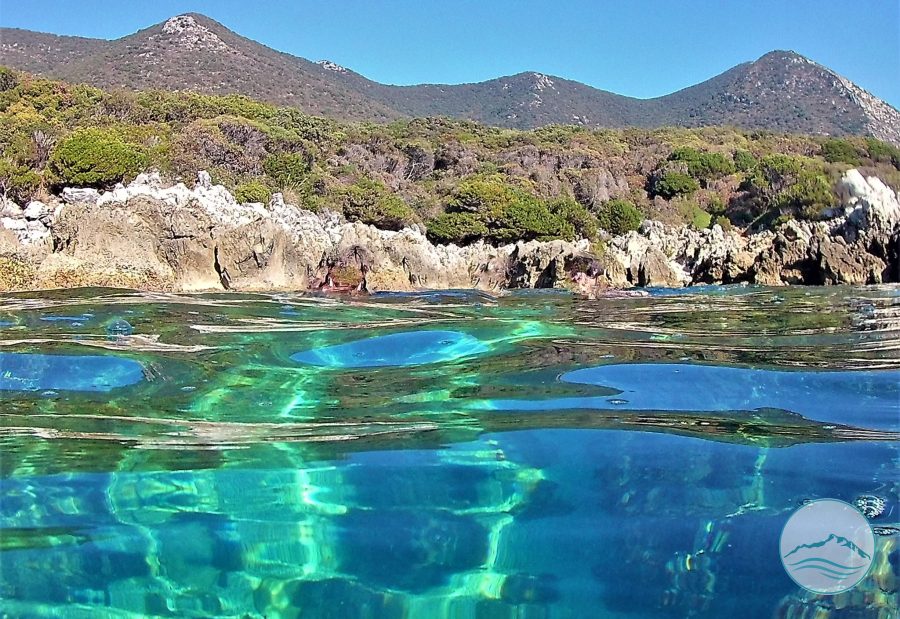
From Via delle Batterie: past the gate at no. 39, take the path that descends towards the rocky shore and continues under the Mediterranean scrub to the fort.

Gallery

La Batteria

La Batteria
Wikimedia Commons
La Batteria
Wikimedia Commons
La Batteria
Wikimedia Commons
La Batteria
La Batteria
La Batteria
La Batteria
La Batteria
La Batteria
La Batteria
La Batteria
La Batteria
polveriera
La Batteria
La Batteria
La Batteria
La Batteria
Wikimedia Commons
La Batteria
da Archivio di Stato di Roma mappe del Catasto Gregoriano

Protected content

The images on this portal are protected by copyright. To request usage rights, write to info@apptron.it.