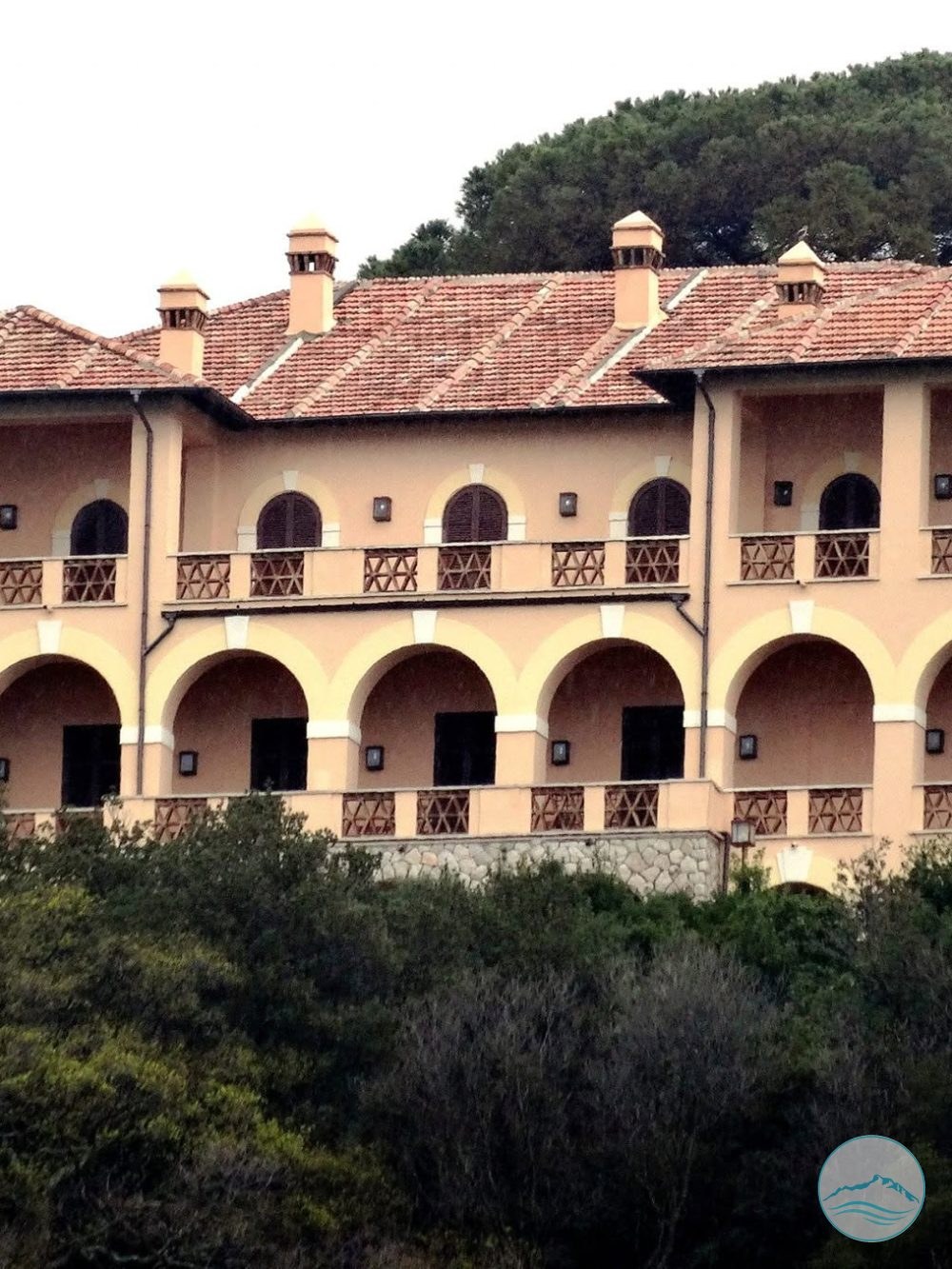
This historic villa is linked to the Aguet family and to the time spent in San Felice Circeo by Prince Stanislao Poniatowski, who between 1808 and 1822 carried out major urban improvements in the village, including raising the Torre dei Templari (Templars' Tower) and installing its famous six-hour clock. With Poniatowski's arrival, San Felice gradually shed its character as a purely fortified village and became an elegant holiday retreat, of which Villa Aguet is one of the surviving examples.
On 20 October 1713 Michelangelo Caetani sold the fief of San Felice to Prince Francesco Maria Ruspoli, who held it until 1718, when the Apostolic Camera exercised its right of first refusal over the Circeo.
The Papal States bought the fief for 100,000 scudi and, from 1721 onwards, at the wish of Pope Innocent XIII, began a series of works aimed at improving the population's extremely harsh living conditions, among them the excavation to uncover the ancient channel linking Lago di Paola to the sea.
However, once the Apostolic Camera had regained San Felice, the fief was leased out several times, sometimes to people who wielded their power entirely to the detriment of the local population, who were taxed, impoverished and pushed to the very edge of subsistence.
Things changed radically on 13 February 1808, when the Circeo was sold to Prince Stanislao Poniatowski for 86,253 scudi.
Although he ruled the Circeo for less than twenty years, his name is firmly rooted in local memory, as well as in the town's street names, since Poniatowski was an enlightened promoter of several projects that genuinely improved the lives of the inhabitants; for the population, which had grown considerably, he built new houses in the lower part of the town.
The prince was also responsible for adding an extra storey to the Palazzo Baronale, moving the clock from the palace gateway to the Torre dei Templari, and demolishing the crumbling bastions inside and outside the historic centre.
San Felice thus lost the fortified appearance it had had since the Middle Ages and became instead a pleasant place to live, just as we know it today. A keen and expert hunter, the prince also built his hunting lodge, surrounded by greenery, in what is now the Aguet park; indeed, the villa of the same name was built on exactly the same spot, making use of the existing structures.
James Aguet, a wealthy Swiss banker, bought the former fief of the Circeo in 1898 and settled there permanently until his death in 1932. One of his main undertakings was the reclamation of the lowland areas of his estate, and he was in fact among the first to call for a definitive, modern solution to the spread of the marshes across the Agro Pontino.
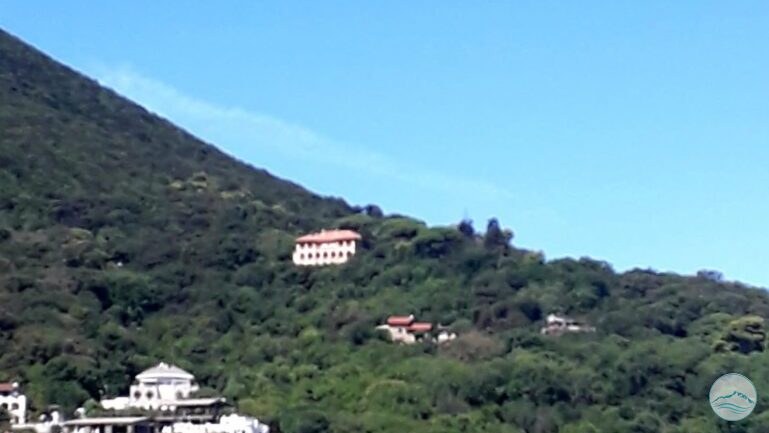
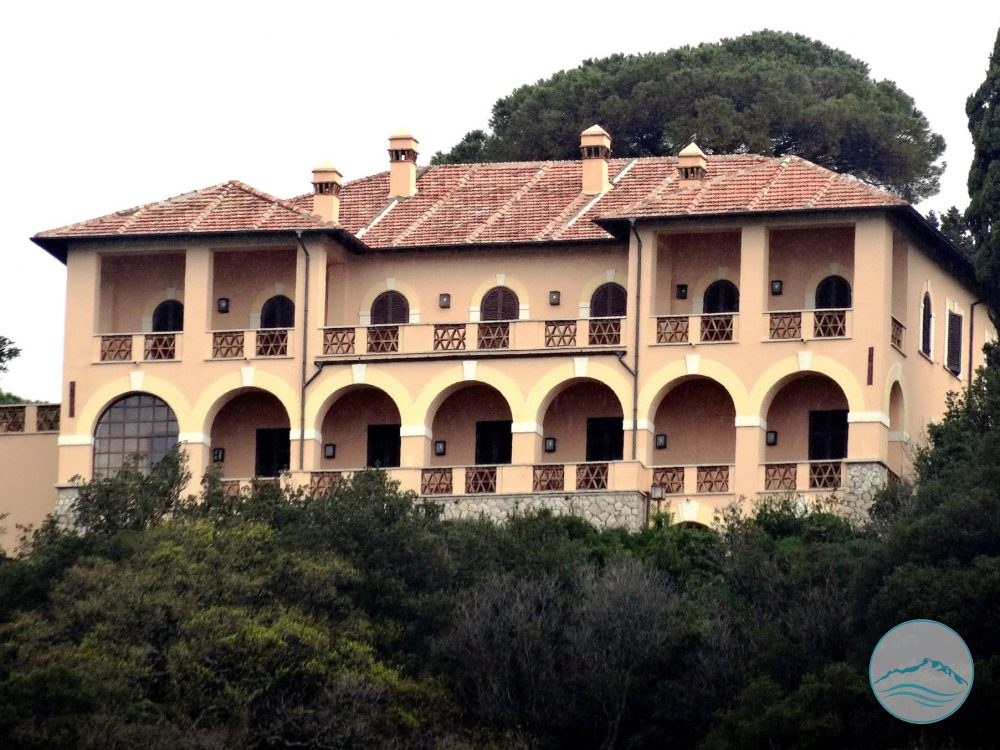
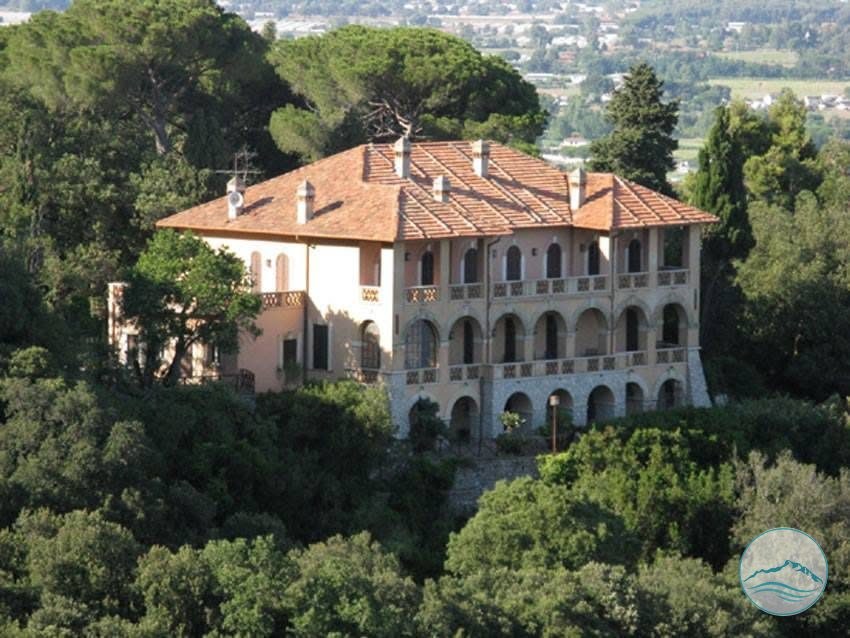
Villa Aguet lies within the dense woodland along the downhill side of Via del Faro, its elegant bulk peeping out through the foliage. It rises over three storeys decorated with round arches. On the first floor the arches are blind, while on the second they open onto an elegant, airy arcaded terrace.
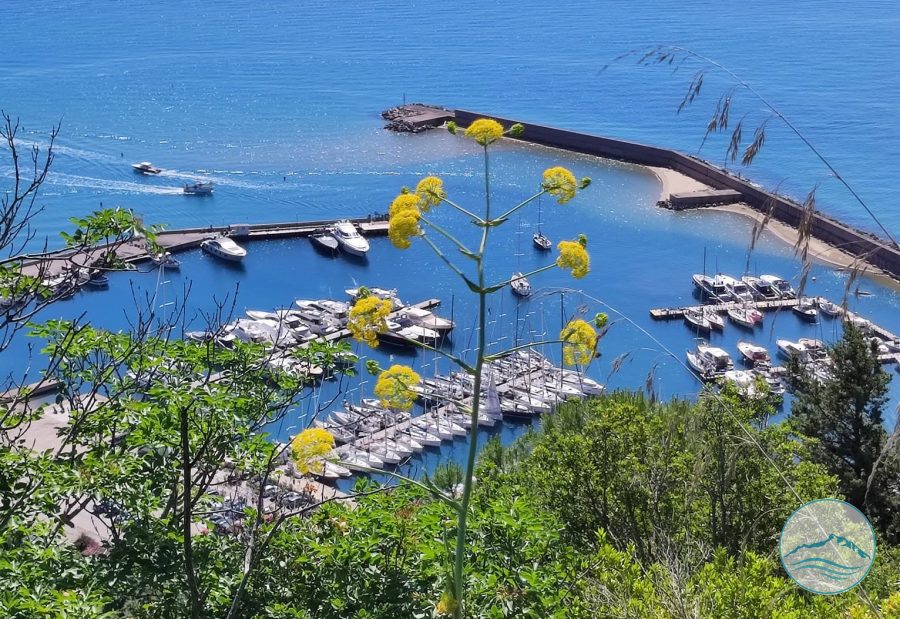
What makes the villa truly unique is its wonderful wood of manna ash and elm, criss-crossed by numerous paths that intersect to form a labyrinth, conceived and created by Prince Ponyatowsky. He was also responsible for building, further downhill, an unusual rectangular structure with a large oval window known as the “Occhio di bue” (Bull's Eye), which produces a remarkable echo and offers a magnificent view over the sea and the harbour.