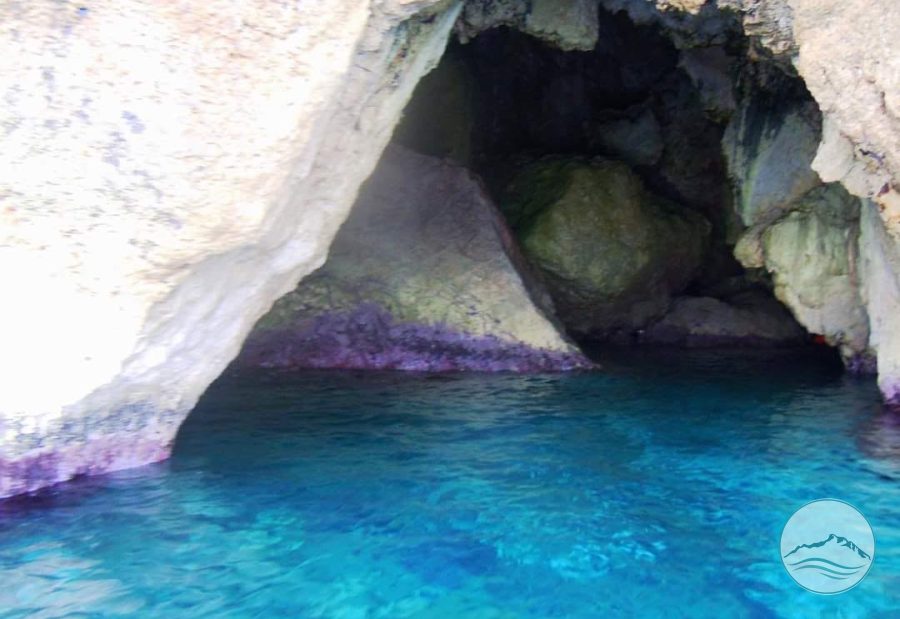
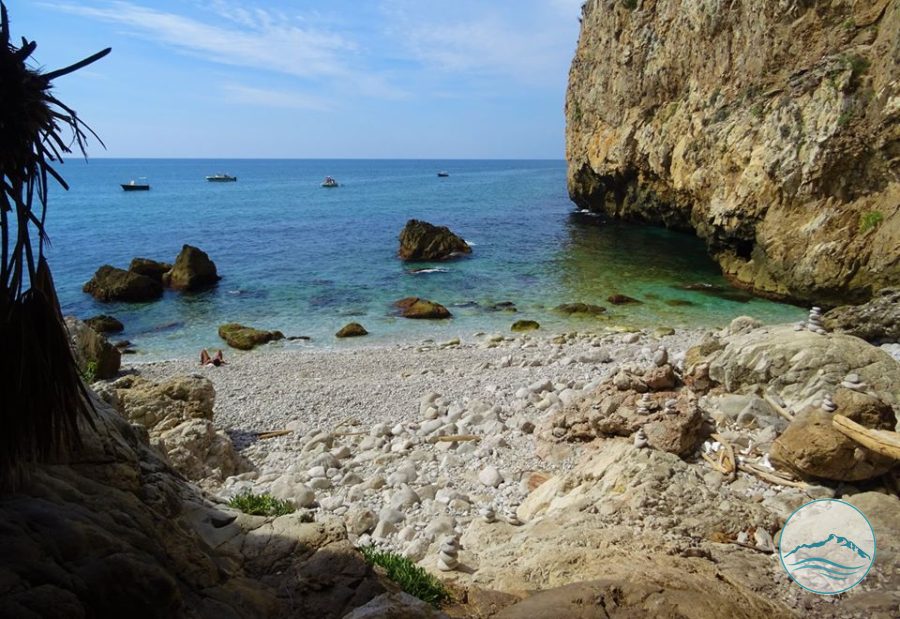
The cave, at the western end of the Circeo promontory about one kilometre from Torre Paola, opens into a small south-west-facing inlet at the end of the steep slope of Monte Circeo known as the “Precipizio”. It was discovered in 1936 by A. C. Blanc during a systematic exploration of the promontory’s caves with L. Cardini, H. Obermaier and Abbé H. Breuil, the renowned French prehistorian after whom it was named. At the time, the cave deposit greatly interested Blanc because it was one of the few substantial deposits still preserved. Systematic excavation began only in 1986, undertaken by the Italian Institute of Human Palaeontology in collaboration with the Anthropology Section of the Department of Animal and Human Biology at Rome’s “La Sapienza” University. Excavation campaigns directed by Professor A. Bietti, described as still ongoing, have yielded numerous important animal remains, human remains and stone tools. Initial studies show that Neanderthals inhabited Grotta Breuil, as evidenced not only by thousands of small flint artefacts belonging to the Pontinian lithic industry but also by fragmentary human fossils from different stratigraphic levels: a fragment of parietal bone and two molar teeth, all clearly Neanderthal in morphology.
The accumulation of animal remains in the cave is attributable almost entirely to human activity. Ibex and deer were the principal prey. Adults were selected for hunting, and the entire carcass was carried back to the site. Marks relating to the different stages of carcass processing, from skinning to consumption, have been identified on the bones. Seasonal indicators provided by the eruption and wear stages of the hunted animals’ teeth suggest that the cave was occupied from autumn to early spring. Bird remains, representing 39 species—including notably the western jackdaw and the red-billed chough—point to a cool temperate climate, colder than today and broadly comparable with present-day Central Europe, and to varied habitats including woodland, rocky areas and open land.
Of particular interest are new results from the analysis of microscopic use-wear traces on stone artefacts. Such studies make it possible to reconstruct the tasks performed with tools made by humans. In the archaeological sample from layer 6 of Grotta Breuil, wear marks indicate butchery, hide scraping and woodworking. Three tools bear striations characteristic of fish scaling. More recently, electron spin resonance (ESR) dating of samples from the upper part of the stratigraphic sequence yielded an age of about 33,000 years before present, a comparatively late date for a Neanderthal settlement and a very late stage in the species’ existence. This means that around 35,000–33,000 years ago, when Homo sapiens had already been present in northern Italy for several millennia, Neanderthals were still living at Circeo, among the last before their extinction.