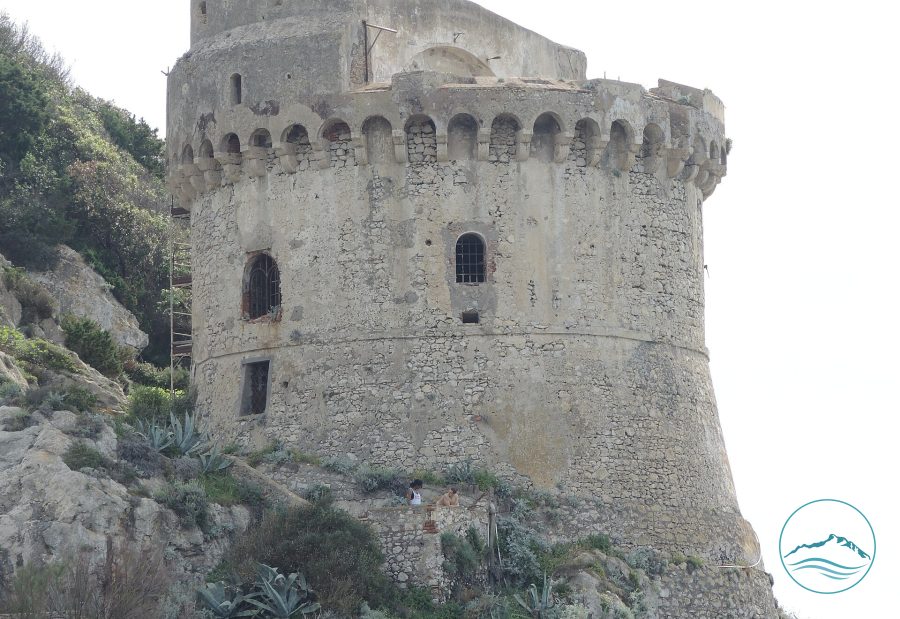
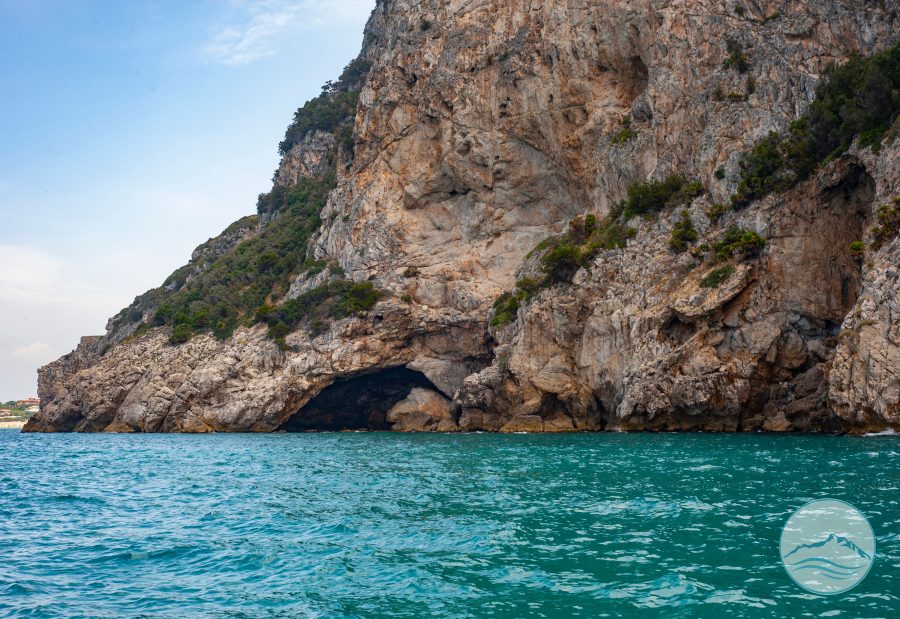
A coastal cave on the southern side of the promontory, along the stretch of cliffs below Torre Paola. It takes its name from the large cleft that continues up to the top, where the tower stands.
The cave lies within a joint, a natural fracture in the rock, that opens onto the sea. You can paddle inside by canoe or SUP, or come in aboard a small boat.
At the back of the cave, a passage in the far wall leads into the great main chamber, where you can clearly see signs of ancient rockfalls and a large colony of bats.
The Grotta Spaccata ("Split Cave") runs along a joint, a fracture in the limestone mass that cuts through the ridge from the top all the way down to the sea. This explains both its name and the curious link between the sea cave and the summit of the hill on which the tower stands.
The watchtower, part of the coastal defence system against pirate raids, is recorded in historical sources as having been built in 1563 under Pope Pius IV.
The bat colony calls for particular care. In caves used by bats, noise, lights and long stays can cause disturbance, especially during the breeding and hibernation seasons, so keep your visit short and avoid bringing strong lights inside.