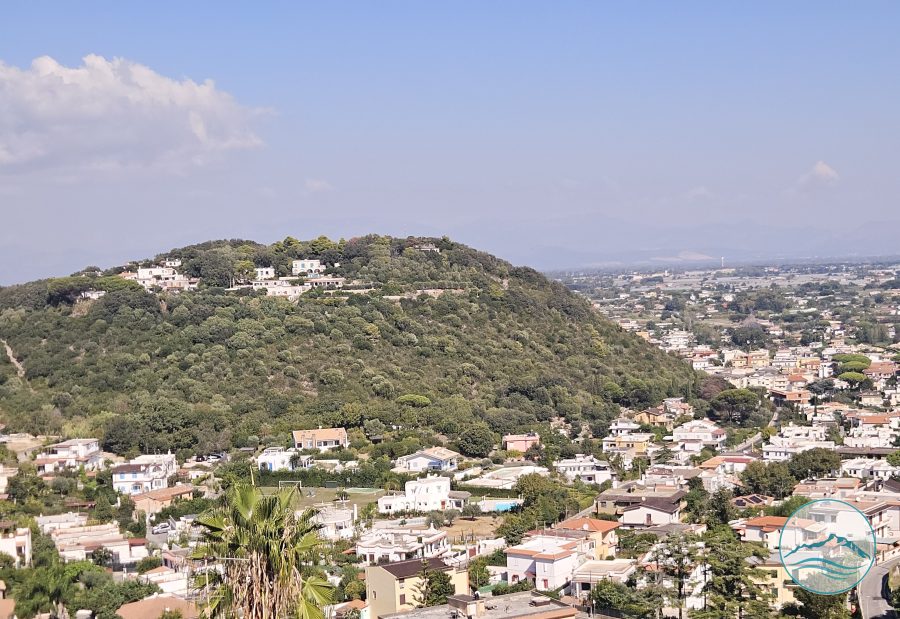
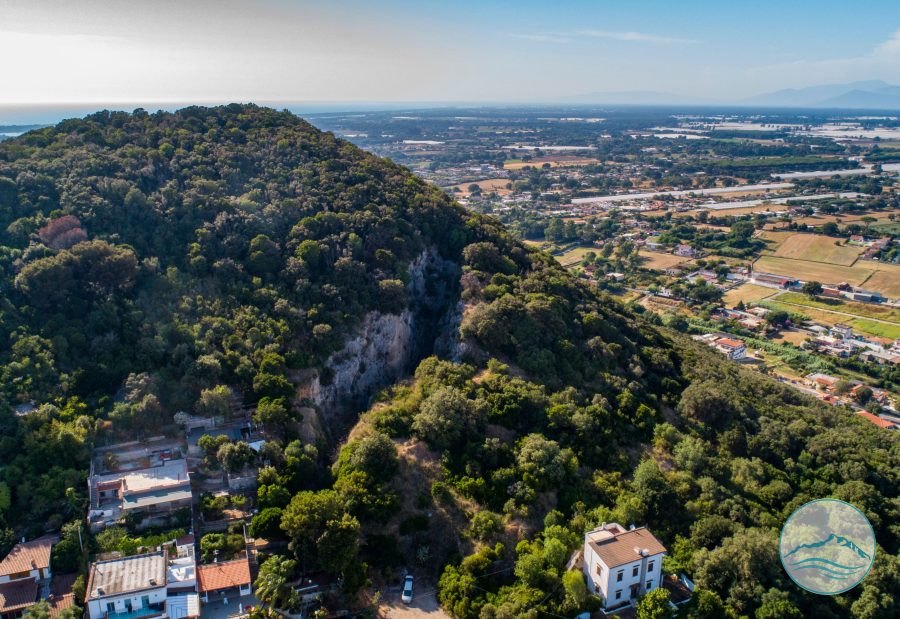
The Circeo promontory was once home to several ancient sanctuaries devoted to different cults, some of which remained in use for a long time. On Monticchio hill, on the north-eastern side of the mountain, lies a large artificial terrace dating back to very early times, where a small sanctuary once stood.
The remains found here date from the Archaic period, more precisely between the second half of the 6th and the 5th century BC. This important evidence would confirm the presence of a Roman colony in the time of Tarquinius Superbus, led by his son Arruns, and certainly earlier than the Latin colony of 393 BC.
The site itself has now vanished completely: all that survives is a base and a cone-shaped well about 6 metres deep, measuring 1.50 metres in diameter at the mouth.
The finds recovered over the years are very varied: antefixes that once adorned the sides of the sanctuary, numerous votive terracottas, black-glaze pottery, a few coins and other fragments of bronze and lead. The most remarkable of all are the decorated polychrome antefixes: one depicts a palm set within a gadrooned halo, while another shows the head of a silenus with a thick moustache and donkey ears. Female figures made with a punch technique on thin bronze sheets were also found, probably created as votive offerings. According to ancient sources, the sanctuary is currently attributed to Athena-Minerva, although scholars have yet to reach full agreement on this.