The Lido di San Felice Circeo, also known as the Levante coast or Levante beach because it faces east, where the sun rises, covers the stretch of coastline running from the Porto Turistico (marina) to Torre Olevola, a distance of about 12 km. It is known for its wide sandy beaches and the striking view of Monte Circeo rising above the sea, and it is a favourite with anyone looking for morning sun and open views across the gulf.
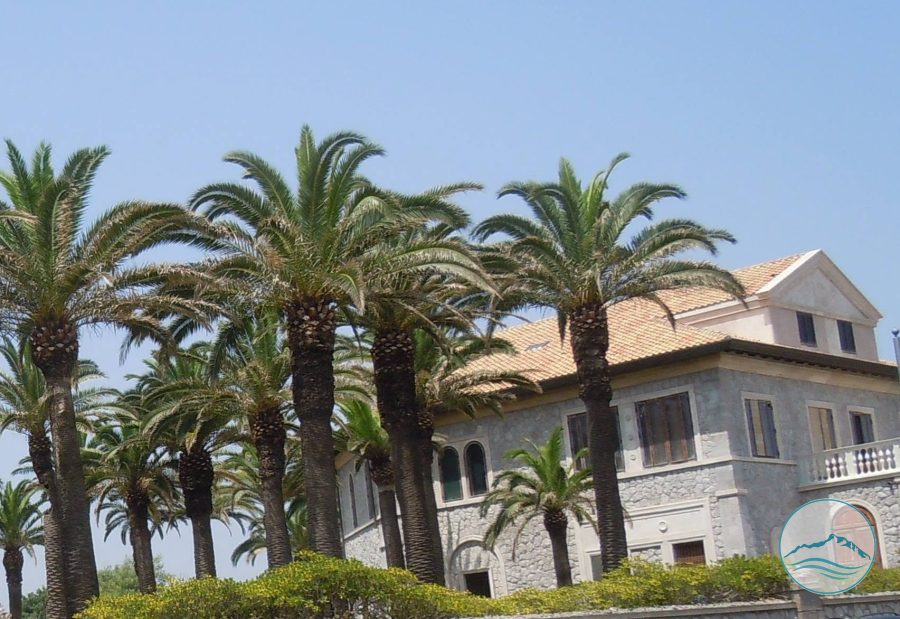
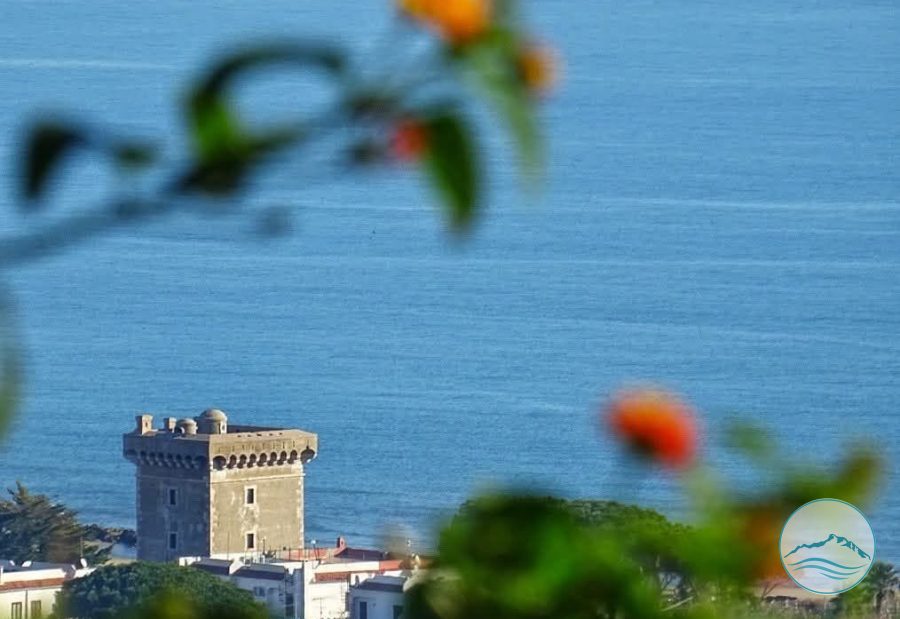
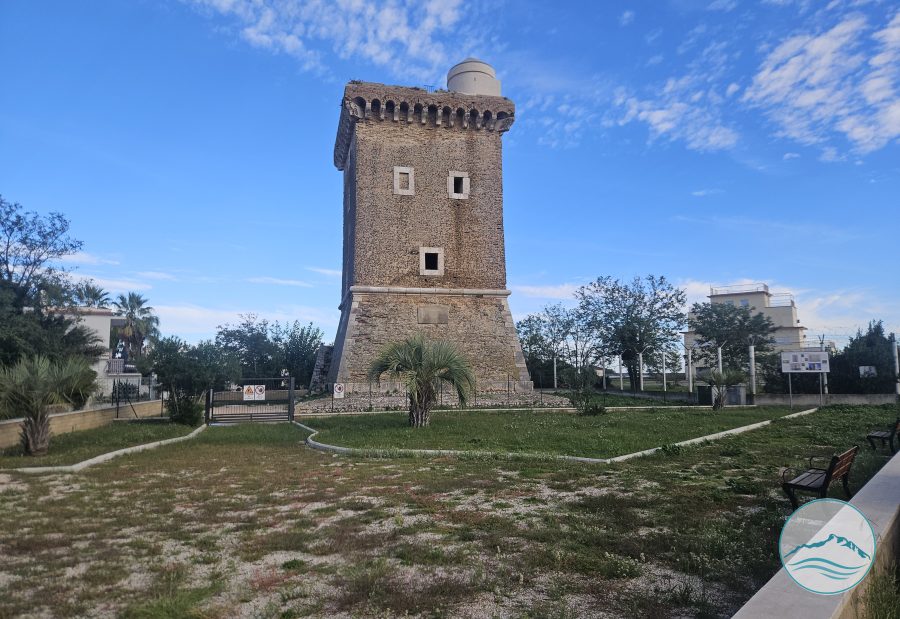
The Lido can be divided into three stretches, each marked by a tower. The first coincides with the marina, overlooked from above by the imposing Torre Fico. Before the marina was built, this was a grassy area dotted with rocky outcrops, following the lie of the land along the Quarto Caldo coast.
The second stretch runs from the Hotel Maga Circe to Torre Vittoria. Lying close to the mountain, this area is highly exposed to the action of the sea, so human intervention was needed to create coves and beaches.
The third stretch starts at Piazzale Rio Torto, the ancient end point of the Fossa Augustea, and continues to Torre Olevola, an area known in local dialect as “tummulito”. This was once a land of vineyards and, above all, of the dunes of the Levante coast, which have sadly been destroyed by coastal erosion caused by human activity.
The Lido di San Felice Circeo lies within the Circeo National Park, established in 1934. It is a beach of fine golden sand stretching out beneath the gaze of the Promontorio del Circeo. The coastline is long and wide, alternating low, sandy sections with higher, rockier ones, and is fringed with Mediterranean scrub, dwarf palms and beach clubs. The sea is blue, crystal-clear and transparent, with gently sloping sandy seabeds that are ideal for bathing and swimming.
Along the coast, free public beaches alternate with numerous fully equipped beach clubs.
A pavement lets you stroll along the seafront and reach free beaches, restaurants, bars and beach clubs, all offering the services visitors need.
Even if you choose a free beach, you can still use most of the beach clubs or have lunch at one of the many restaurants overlooking the sea. Today, part of the town’s summer life takes place in Piazzale Cresci, with events on festive evenings.
The beach is easy to reach from Rome: follow the Statale 148 (SS148) and take the San Felice Circeo exit.
Seen from Gaeta, the Promontorio del Circeo looks like an island, just as it was some 3 million years ago, in the distant Pliocene–Lower Pleistocene. The east-facing stretch of plain was formed by the steady deposition of clayey-sandy sediments together with continental deposits.
On the plain between the Sisto river and the coastline, sands rich in fossils were laid down when sea levels were higher; during periods of marine regression, by contrast, when the sea withdrew and its level dropped, wind-blown sands were deposited.
In the central sector, the deposits consisted of sand, peat bogs and clay, sheltered by the natural barrier of the western dunes, which held back the sea coming from the west; here the sediments carried by both rainwater and the run-off of Apennine rivers built up.
In the Middle Pleistocene, the foothills were invaded by the sea, and they were uplifted at the same time as the Monti Lepini, as shown by the sediments, fossils and traces found inside the caves. Thus, alongside the marine sediments, volcanic material was deposited more or less intermittently: from the north, from the great Vulcano Laziale, which today corresponds to the Colli Albani (Alban Hills); from the south, from numerous small eruptive centres, now only partly exposed and all dating back to the Upper Pleistocene.
The “beach” environment is a highly dynamic area in constant motion, with a delicate balance precisely because of the many factors it is continually subject to. These can be divided into passive factors, such as the topography of the area and the materials it is made of, and active ones, such as winds, wave action, sea currents, tides, river input, the activity of living organisms and the presence of people.
On this stretch of coast it is more accurate to speak of a sand dune, made up of more or less loose sands of ancient origin. Looking at the coastline today, we see a landscape that has changed over time, reshaped by people through the construction of roads and houses and, down on the beach itself, by the semi-permanent installations of the beach clubs.
Given the situation today, and considering the constant dynamism the beach is subject to, the ideal is to strike the right balance between its use, mainly in summer, and the management of the seafront, in order to preserve a public asset that matters to the ecosystem, to people and to the local economy.
It is worth remembering that every grain of sand has taken a very long time to form, and it is all these tiny grains together that make up the beach. Please respect this beautiful and fragile environment: don’t leave litter behind, and use the bins provided at the recycling points.