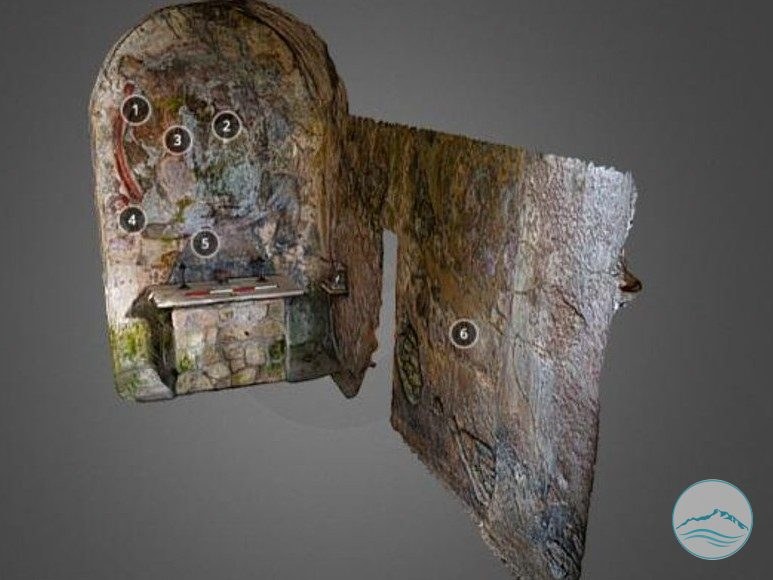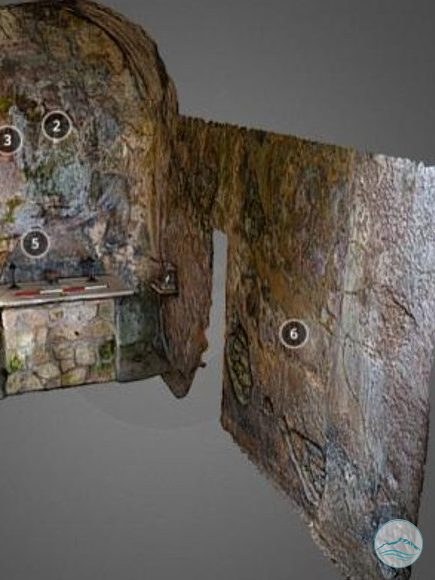
1. Near the Capo Circeo lighthouse stands a small chapel that was once dear to the people of San Felice but is now almost forgotten, as it is so difficult to reach.
Known as the “Romitorio del San Salvatore” (Hermitage of the Holy Saviour), it is documented as far back as the 13th century.
The building consists of two upper rooms, one used as a chapel and the other as the custodian's sleeping quarters (the “romitorio”, or hermitage, that gives the site its name), and two lower rooms, which have since been destroyed.
Its dedication to the Holy Saviour comes from large frescoes of the Redeemer (possibly by the same artist who painted those in the “Church of the Beata Vergine della Pietà” in Piazzale San Francesco), which have sadly deteriorated badly because of the damp.
Early sources (Capponi) describe the full composition, which depicted the “mother and child”: she seated on a throne and dressed in blue, the child clothed in red, both supported by four angels.
The sources also mention the now-vanished figures of Saint Caesarius and Saint Sebastian (the town's former patron saints).
According to historians, these iconographic choices date the paintings to the period when the Caetani family ruled San Felice Circeo. The building suffered serious damage during the corsair raid of around 1715, but above all at the time the nearby Torre Moresca was destroyed in 1809.
The site stands on a rectangular Roman cistern, close to two smaller ones that supplied water to a nearby imperial villa, some of whose boundary walls can still be seen.