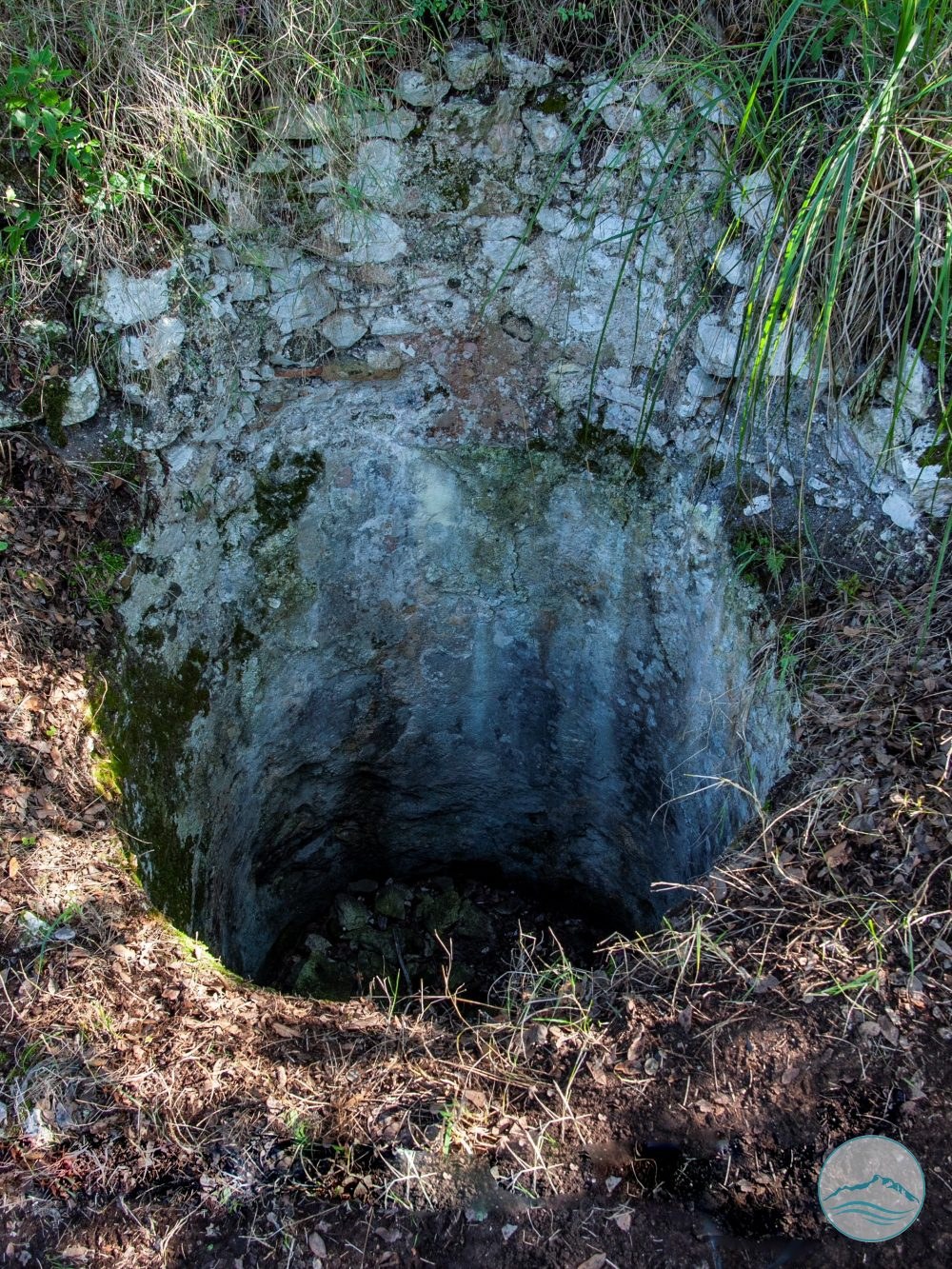
An underground structure with a tholos roof (a false dome made of concentric rings of corbelled blocks), located about twenty metres from the south-west wall of the Acropolis of Circei, inside the circuit of the Cyclopean Walls.
Described as early as 1792 by the French archaeologist Petit-Radel, who gave it its curious name ("Cistern of the Idolised Toad"), the structure lacks the technical features typical of waterproofed cisterns. This has led some scholars to suggest that it served a different purpose, perhaps funerary or religious, rather than simply storing water.
The Acropolis of Circei, on the summit of the promontory, is enclosed by a circuit of polygonal masonry, the so-called Cyclopean Walls. Their date is debated, somewhere between the Archaic period and the early Republican era, and is linked to the founding of the colony of Circeii.
The French visitor Louis Petit-Radel, who explored the promontory in the late 18th century, was among the first to describe the walls and this underground structure, coining the curious name by which it is still known today. The tholos roof, with rings of stacked blocks each projecting slightly beyond the one below, recalls structures known from the ancient Mediterranean and is not typical of ordinary Roman cisterns; without systematic excavation, the funerary or religious hypothesis remains open. The structure lies within the archaeological area of the acropolis, along the Cyclopean Walls trail.